


NEWS
Health updates and
clinic news
PSA PROSTATE CANCER MARKER: WHEN TO GET TESTED?
News
Sep 18, 2026

Overview of PSA
PSA (prostate-specific antigen) is a protein produced by the cells of the prostate gland, including both normal and cancerous cells.
Normally, a small amount of PSA is present in the blood. However, when the prostate is inflamed, enlarged (benign prostatic hyperplasia), or affected by cancer, PSA levels in the blood can rise.
Therefore, PSA is considered the most important biomarker for diagnosing and monitoring prostate conditions, especially prostate cancer.
Role of the PSA test
-
Prostate cancer screening: helps with early detection in high-risk men.
-
Diagnostic support: used in combination with digital rectal examination (DRE) and ultrasound.
-
Treatment monitoring: PSA levels drop significantly after surgery, radiation, or hormone therapy. A subsequent rise may suggest recurrence.
-
Disease progression assessment: PSA levels partially reflect tumor volume and the extent of spread.
Normal PSA values
Healthy men typically have a PSA level < 4 ng/mL. However, the normal threshold also depends on age and prostate volume:
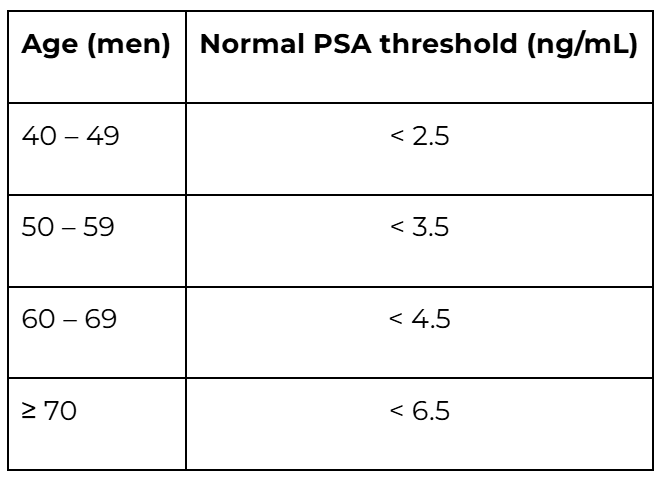
-
PSA > 10 ng/mL: high risk of prostate cancer.
-
PSA between 4 – 10 ng/mL: The "gray zone" – could be cancer, or simply due to enlargement or inflammation. Additional tests (biopsy, MRI) are required.
Factors affecting PSA levels
Besides cancer, several other conditions can increase PSA:
-
Benign prostatic hyperplasia (BPH).
-
Prostatitis (prostate inflammation).
-
Urinary tract infections.
-
Ejaculation within 48 hours before the test.
-
Long-distance cycling, digital rectal exams, or urinary catheterization.
Physicians typically advise avoiding sexual activity, vigorous exercise, or prostate-related procedures for 2–3 days before blood collection.
Free PSA and %free PSA ratio
In the blood, PSA exists in two forms:
-
Free PSA
-
Bound PSA (attached to proteins)
The %free PSA ratio helps distinguish between cancer and benign enlargement:
-
%free PSA < 10%: high risk of cancer.
-
%free PSA > 25%: likely due to benign enlargement.
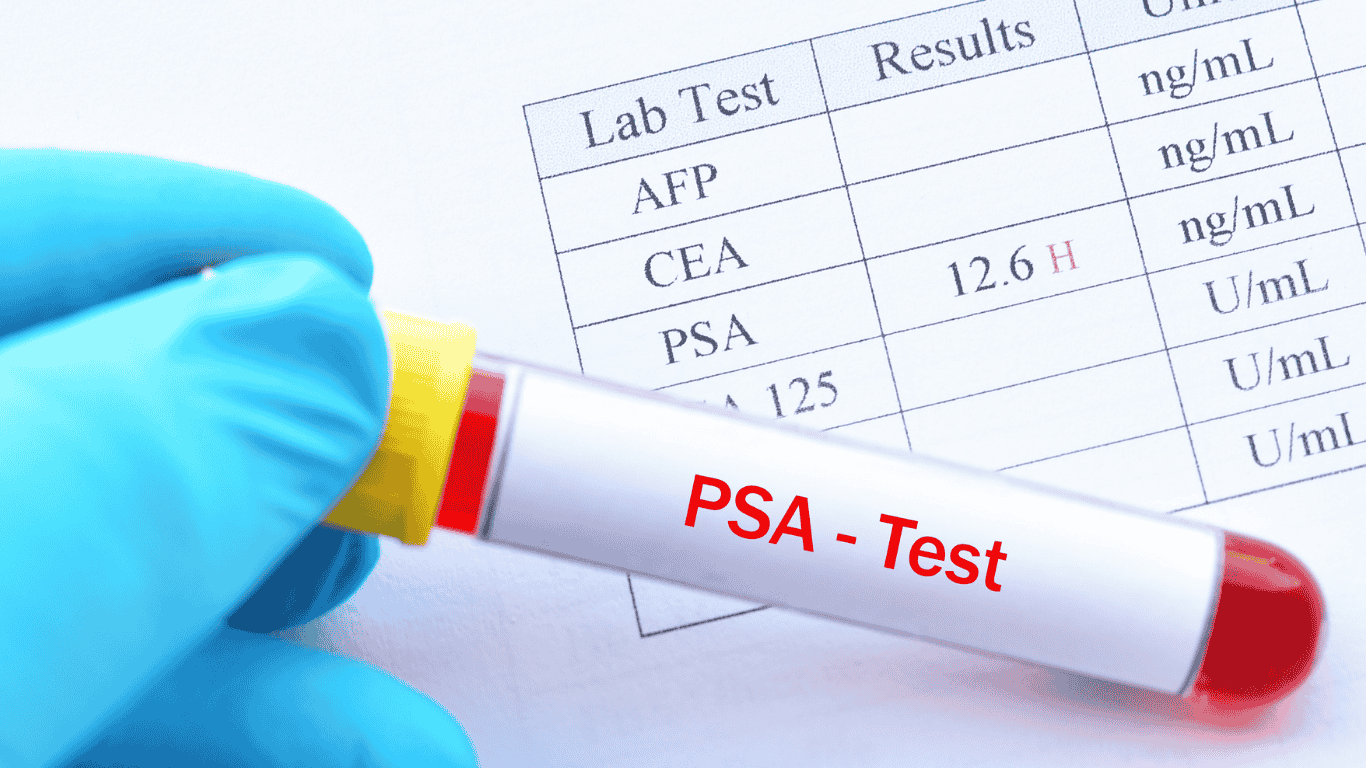
Indications for PSA testing
A physician may order a PSA test for:
-
Men over 50 (routine screening).
-
Men over 40 with risk factors (family history of prostate cancer, African descent).
-
Symptoms of urinary disorders: difficulty urinating, frequent urination, weak stream, nocturia (nighttime urination), or blood in the urine.
-
Monitoring patients already diagnosed and treated for prostate cancer.
Sensitivity and specificity
-
Sensitivity: PSA detects approximately 70–80% of prostate cancer cases.
-
Specificity: relatively low (40–50%) because PSA also increases in many benign conditions.
-
Combining PSA with a digital rectal examination (DRE) and magnetic resonance imaging (MRI) improves diagnostic accuracy.
Procedure
-
Preparation: no fasting is required. Avoid ejaculation, cycling, or prostate interventions for 48 hours before the test.
-
Execution: a standard venous blood draw.
-
Results: typically available within the same day.
When to see a doctor
Consult a urologist or men's health specialist if you experience:
-
Difficulty urinating or a weak urinary stream.
-
Nocturia or urgent need to urinate.
-
Blood in the urine or semen.
-
Pelvic pain or bone pain (which may indicate advanced stages).
-
Abnormally high or steadily rising PSA results.

Frequently asked questions (FAQ)
1. Does high PSA always mean prostate cancer?
No. PSA can increase due to benign enlargement or prostatitis. A biopsy is necessary for a definitive diagnosis.
2. If my PSA is normal, am I definitely cancer-free?
Not necessarily. Some early-stage cancers do not raise PSA levels. Regular monitoring is essential, especially if risk factors are present.
3. How often should I get a PSA test?
-
Healthy men over 50: every 1–2 years.
-
High-risk individuals: starting from age 40–45.
-
Post-treatment patients: usually every 3–6 months as directed by a doctor.
4. Can a PSA test replace a biopsy?
No. PSA is only a supporting tool. A prostate biopsy remains the gold standard for diagnosis.
5. Can I lower my PSA without medication?
Certain lifestyle changes can help stabilize prostate health: a healthy diet (reducing animal fats, increasing greens), maintaining a healthy weight, regular exercise, and avoiding tobacco and alcohol.
Conclusion
The PSA test is a vital tool for detecting, monitoring, and predicting the prognosis of prostate cancer. However, it is not absolutely specific and must be used in conjunction with clinical exams, imaging, and biopsies.
Regular PSA screening, particularly for men over 50 or those at high risk, facilitates the early detection of prostate cancer—a common disease that is highly treatable when diagnosed in time.
To schedule a PSA prostate cancer marker test at DYM Medical Center Vietnam, please contact us:
-
DYM Medical Center Saigon: Room B101-B103, Basement 1, mPlaza Saigon Building, No. 39 Le Duan, Sai Gon Ward, Ho Chi Minh City
-
DYM Medical Center Phu My Hung: Room 3A01, 3A Floor, The Grace Building, 71 Hoang Van Thai Street, Tan My Ward, Ho Chi Minh City
-
DYM Medical Center Hanoi: B1 Basement, Epic Tower, Alley 19 Duy Tan, Cau Giay Ward, Ha Noi
-
Hotline: 1900 29 29 37
Register now to receive the latest offers
Book an appointmentMedical specialties
- Corporate health check-up
- Dental Checkup Package
- Pediatric Examination Package
- Work Permit Examination Package - Work Permit Supplement
- Pre-wedding health check-up
- Obstetrics and Gynecology Package
- Cancer Screening Package
- Health check-up for individuals
- Japan pre-entry Tuberculosis Screening(Jpets)
- Food Handler package
- Medical examination for labor export to Japan
- Medical examination for specific skills to work in Japan (Tokutei)












Contact us
Reach out to DYM for quick support through
our official channels.